Primum non nocere, a phrase that is often used in medicine, usually translated as “First, do no harm”. In medicine, its meaning implies the need to estimate the possible risks of a certain medical treatment, as well as the possible benefits – in other words, to do a risk-benefit analysis – and act accordingly.
Every medical decision carries the potential for harm, thus all decisions should be brought out after a risk-benefit analysis.
Although it is mostly used in medicine and pharmaceutics, I often remember that phrase in many other different situations. It can be well applied in biology, too.
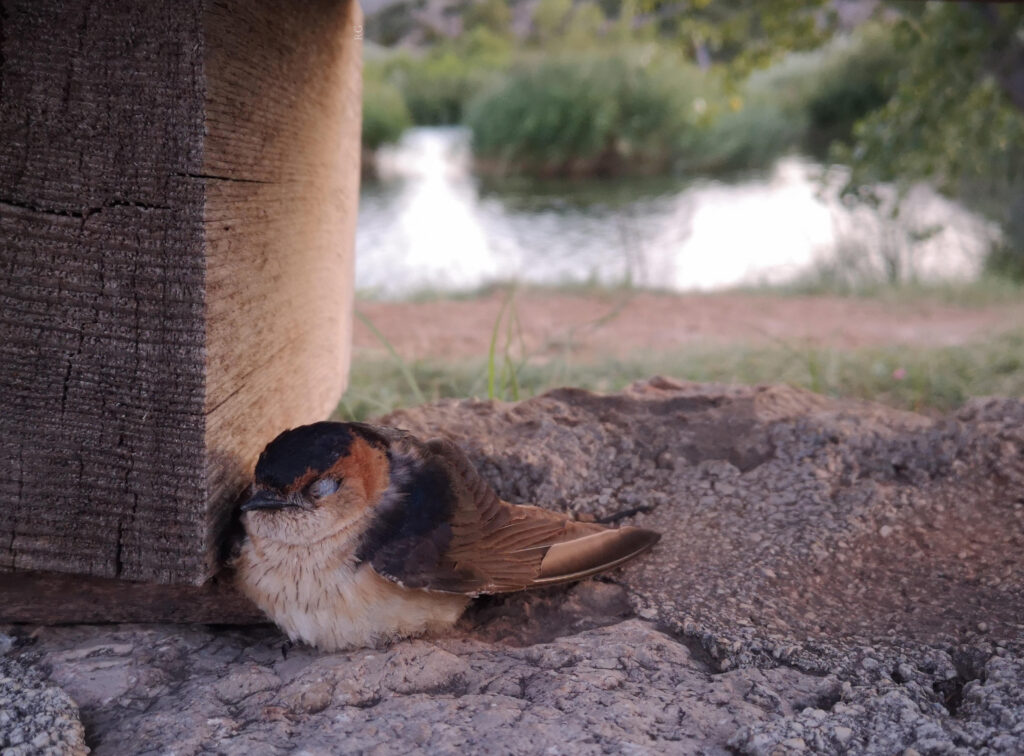
Maybe sometimes you have seen someone trying to help a young bird that has fallen from the nest. What they didn’t know is that young birds often leave their nests shortly before they learn how to fly. Even if you may not see them, their parents stay close and take care of them. Removal of a young bird from the wild may seem like the right thing to do, but in most cases, it is completely wrong.
Maybe you heard someone found abandoned kittens and pet them because they were cute, or even took them home because they were left in the grass. What they didn’t know is that mother often leaves kittens somewhere safe, for example in their nest or tall grass, in order to hunt or to change the position of the nest. Imagine going to the store, coming back home and realizing someone took your children because you were not around. Even if you don’t take the kitten away from its mother, if you touch the kitten or its nest, its mother can sense the human scent and may abandon it.
Maybe you took a sea star out of the sea for only a minute or two to take a proper photograph of it, and then returned it to the sea. What you probably didn’t know is that even a short time of holding a sea star out of the sea can lead to its death by suffocation.
Maybe someone you know killed a snake because they acted out of fear when really, it did not pose a threat. Our fear, ignorance, and repulsion toward other species cannot justify a reason to harm them. There are pretty high chances that a snake only wanted to hide or run away – doesn’t matter if it was venomous or not.
There are many more examples of our acts that harm other species, even when we think we helped, or did the right thing.
The greatest reason for those wrong acts is lack of knowledge.
First, do no harm.
If you are not sure what the right thing to do is – rather find out, explore, or ask someone who has proper knowledge of it, and then act.
Literature
https://accp1.onlinelibrary.wiley.com/doi/abs/10.1177/0091270004273680
https://www.oxfordreference.com/view/10.1093/oi/authority.20110803100345841