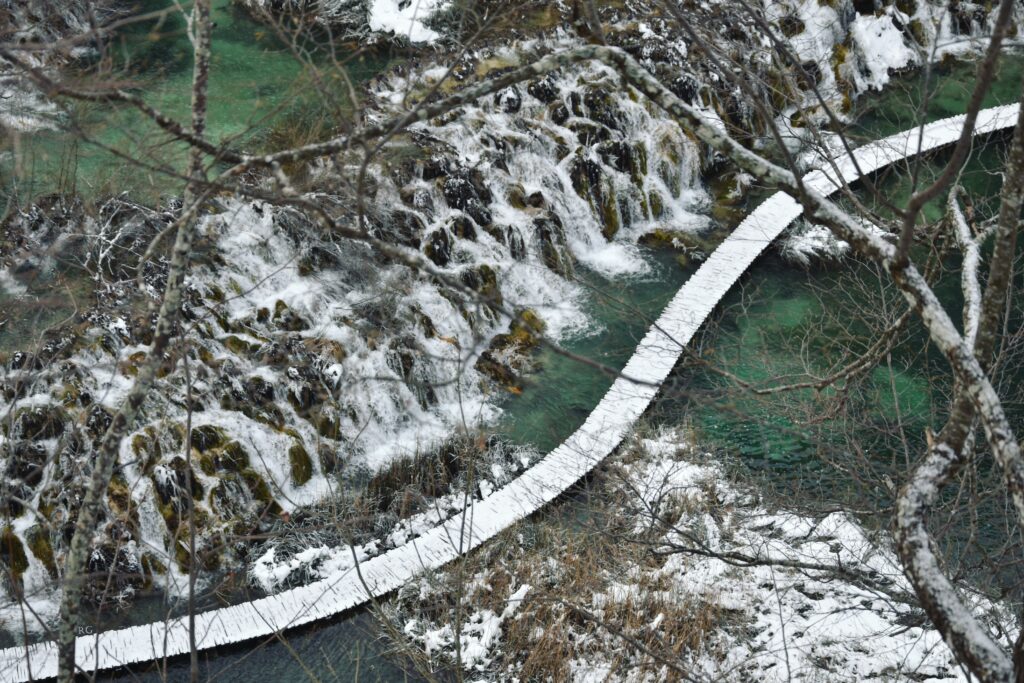
Croatia, a relatively small country as it is, brings an astonishing number of natural wonders. One of them is this place – the Plitvice Lakes.
It is the largest, the most visited, and the oldest national park in Croatia, founded in 1949. It has also been on UNESCO’s World Heritage List since 1979.
This national park covers an area of almost 30.000 ha. It includes forests, meadows, and the most recognizable feature – a series of lakes formed by tufa barriers*, which serve as natural dams, dividing lakes and creating waterfalls.
In order to be included on the World Heritage List, a certain site has to be of outstanding universal value, and also to meet at least one out of ten selection criteria.
According to UNESCO (The United Nations Educational, Scientific and Cultural Organization), “Outstanding Universal Value means cultural or natural significance which is so exceptional as to transcend national boundaries and to be of common importance for present and future generations of all humanity. As such, the permanent protection of this heritage is of the highest importance to the international community as a whole.”
The Plitvice Lakes meet three of ten selection criteria:
- criterion VII – they contain superlative natural phenomena (tufa creation) and areas of exceptional natural beauty and aesthetic importance;
- criterion VIII – they are an example of significant on-going geological processes: creation of tufa barriers;
- criterion IX – they are an example of significant on-going ecological processes: tufa barriers are also the result of exceptional ecological processes.
But as we all know, in order to protect natural values, it is not enough to simply declare them protected as a national park or some other category of protected areas.
Hard work and proper management are key to conserving a certain place as it is for our future generations.
*tufa barriers and their genesis are explained in one of the previous posts, Kuda’s bridge: http://www.ritosaurus.com/posts/kudas-bridge/
Literature
https://whc.unesco.org/en/list/98/
Pingback: Plitvice Lakes - part 2 - Ritosaurus