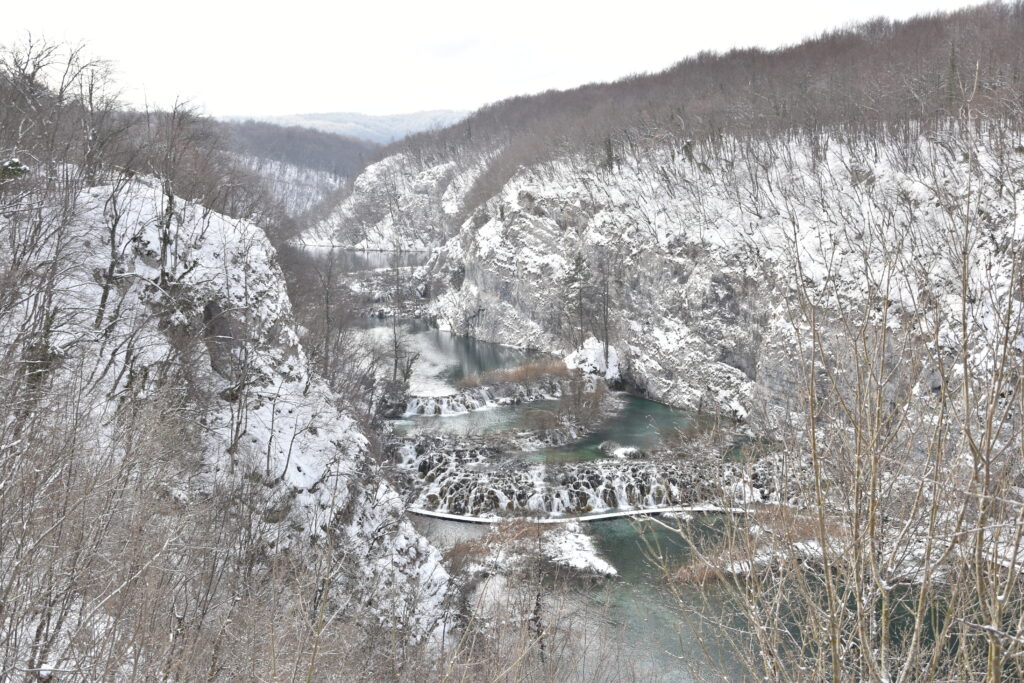
Places of unique natural processes, diverse natural phenomena that capture our attention, and beautiful landscapes are often proclaimed as protected areas because of their outstanding value.
As a certain protected area gains popularity based on its biological, ecological, aesthetical or some other value, it attracts more visitors.
But, while the experience of seeing those natural wonders with one’s own eyes can be fulfilling, transforming and inspiring, human presence can also bring a negative impact on a certain protected area.
Plitvice Lakes National Park is a great example for this matter.
While the most dominant issues that affected the Plitvice Lakes in the last century were illegal activities (for example, bear hunting and dynamite fishing), in recent years the Park meets one other factor: tourism.
Many people from around the world have heard of this natural wonder. With the quality promotion, beautiful pictures, and a good offer, every year the Park receives the most visitors of all Croatian national parks.
Because of a growing need for accommodation, more and more illegal facilities are built within the borders of the Park.
The annual number of visitors grows. Due to heavy traffic and crowd caused by non-regulated ticket sales, limits to visitor numbers had to be set.
There were also several cases of bad wastewater treatment inside the Park. It is not needed to say that a decrease in water quality would be fatal for all the aspects of this National Park’s values.
With a lot of visitors also comes pollution in terms of air pollution and littering.
Due to all these negative impacts, in 2016 The World Heritage Committee discussed the Park’s inscription on the List of World Heritage in Danger because its Outstanding Universal Value was – and still is – threatened (the Park was already on that List in the 1990s).
Since then, an effort was put in maintaining the Park’s condition.
The lesson of this example is that we cannot continuously take from our nature without giving anything in return. We cannot simply use it for our purposes, exploit its beauty to gain money and fame, without thinking of its well-being.
The main purpose of protecting a certain place is clear by itself – protection. Not economy, not tourism. What humans gain from it should be less important, but often becomes the primary task.
In my opinion, the keys to quality protection are conscience and balance.
The conscience of all employees in protected areas, in order to avoid misuse of their position, and conscience of all visitors of protected areas, in order to avoid littering or damage of any kind.
Balance in managing a protected area. Protected areas are worthy of being seen and felt, but at what cost? Is it really worth harming the natural balance that has existed for centuries just so people could profit for a glimpse of time?
With sustainable management that is less human-oriented and more focused on the main character of this story, nature would thrive longer, and our children could enjoy what we enjoy today.
You can find the first text about the Plitvice lakes here:
Literature