All of us have heard about the problem of plastic pollution. It has been one of the hot topics lately.
And the reason it has been so interesting is that its impact on the environment is huge and long-lasting, but still, plastic has been used worldwide in enormous capacities.
A long time ago, I first noticed the problem of plastic pollution when I dived under the sea surface – where I thought nature was safe from human impact – and found worrying amounts of plastic debris.
It changed my thoughts on plastic pollution: something that was in my mind localized and sporadic turned out to be a much bigger issue.
Every year, at least 14 million tonnes of plastic end up in our oceans – plastic makes 80% of all marine debris.
No matter how far from the sea you live, plastic finds its way through drains and rivers to the sea and becomes a serious problem for different parts of the food chain.
Around 1 million plastic bottles are bought every minute around the world.* And plastic bottles are far from the only widespread problem.
Around 190.000 plastic bags are consumed in the European Union every minute (100 billion every year). That is more than 200 plastic bags per person in one year! And only about 7% of it is recycled.
Do you buy a plastic bag every day?
If you use plastic bags often, do you know the reason?
Is it that you are not concerned about the environment at all, or do you simply forget to bring a reusable bag with you? Are you just used to buying plastic bags and you are not ready to give up that habit, or you don’t want to pay more for reusable bags?
Plastic is everywhere around us, completely incorporated into our daily lives, but still, the choices we could make to reduce plastic are not poor at all.
If we can use one reusable grocery bag hundreds of times, why buy one plastic bag every day? We can choose to reduce plastic in our homes, so why choose something that harms our environment only because it is convenient at that moment?
Yes, those choices require a little bit of planning in advance, a bit more time and effort, but nature will be thankful to you 🙂
So let’s see – how can we reduce plastic waste in our homes? Reduce – reuse – recycle!
Reduce
- start using reusable bottles
Buy a reusable bottle (glass or metal one) and find ways to keep it by your side, especially when you are somewhere out. I bought most plastic bottles when I forgot to bring my own, it was hot outside and I couldn’t wait to come home to drink water. It takes some time to build a habit of taking the bottle with you every time you go out.
For me, the best way to remember it is to put it next to other things that I will definitely remember to take out – keys and wallet. And last but not least, I bought the prettiest bottle I could imagine. This way, I am sure I will want to bring it with me as often as possible.
- use reusable grocery bags instead of plastic bags
This is such an easy and incredibly useful tip, and I would say that it’s perfect beginner-friendly advice. If you use much plastic in your everyday life, this tip could be the one to start with. Cotton or canvas bags are very practical, and they can also be washed.
Same as the previous tip, it is crucial that you remember to take reusable grocery bags with you when going shopping. Otherwise, you could end up at a cash register without any bags and you’ll have to buy plastic ones.
Everything else is as simple as it gets. Several reusable grocery bags can last for a long time, and replace a huge amount of plastic bags, helping you reduce plastic waste.
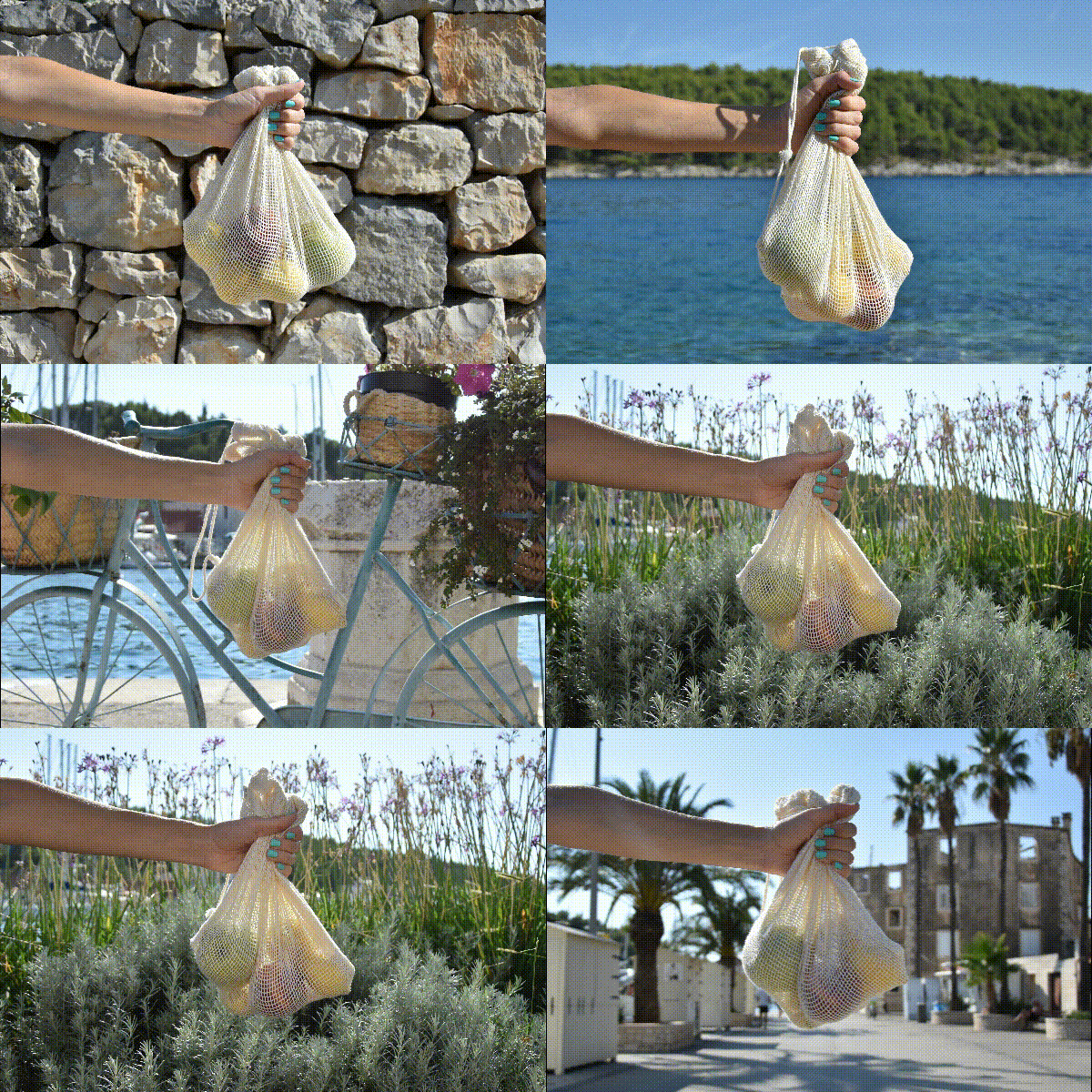
- use a knit produce bag instead of lightweight one-time plastic bags
Along with the previous tip, this was the major reason for the reduction of one-time plastic bags in my home.
A knit produce bag is perfect when you have to buy fruits and vegetables in larger quantities. And if you have to buy only one or a few pieces of fruit or vegetables, you don’t even need a bag to weigh them. You can simply put them on a scale, without a bag.
I usually use knit bags when buying lemons or apples because I buy them in larger quantities. If I’m buying a few carrots or zucchini, I don’t use any bags.
- avoid single-use plastic (cutlery, straws, etc.)
Today, it is easier to apply this tip, as single-use plastic gets more and more replaced by other materials. Plastic straws are replaced with paper and metal straws, plastic cups with paper ones, plastic cutlery with wooden, etc. so applying this will be easier than before.
Takeaway food from some restaurants still includes single-use packaging and cutlery, so you can ask them not to include plastic packaging in your order.
- choose products that include less plastic packaging
When you can, choose the products that are not packed in plastic.
It can be choosing the same drink in a glass bottle instead of a plastic one.
Also, we can often choose bulk food (bread, fruits, and vegetables) over that same food packed in plastic containers and cling film. We buy the same food, but with less plastic.
Reuse
There are many DIY ideas on how to adjust and creatively repurpose plastic products. I am just going to walk you through some simple tips that were valuable to me.
- find a new use for your PET bottles
Before throwing it in the trash can after one use, see if you can find a new purpose for your plastic bottle and thus prolong its life.
PET bottles in my household serve for watering plants, bringing extra water when my reusable bottle is not enough (for hikes, trips, etc.), or bringing water for my dog when we go for a longer walk.
- give a new purpose to your ice cream container
After eating the whole ice cream, wash the ice cream container and use it as a tupperware or for freezing food.
- reuse small cosmetic bottles
If you’ve ever traveled by plane, you probably had to buy shampoo or shower gel in small packaging in order to easily pass the check-in. But once we’ve used the whole gel, we usually throw the packaging away.
Why wouldn’t those bottles become, in a way, reusable bottles for shampoo? I use three bottles smaller than 100 mL that are just perfect for traveling by plane, or even a weekend getaway, where I definitely won’t need a large shampoo.
When I use up the product, I just rinse the bottle and prepare it for the next trip, when I will fill it with the desired gel, shampoo, or body cream.
recycle
Plastic packaging is all around us and it is almost impossible to avoid it completely. So if you still end up with different types of plastic waste in your home, check out if it is recyclable and then – recycle it!
Though recycling at home may seem time-consuming, trust me, it isn’t. Tearing apart packaging and products that are made of various materials, and dividing them into separate containers at home, usually takes far less than a minute. And it is definitely worth it 🙂
*https://graphics.reuters.com/ENVIRONMENT-PLASTIC/0100B275155/index.html
Literature
https://www.iucn.org/resources/issues-brief/marine-plastic-pollution
https://www.nrdc.org/stories/single-use-plastics-101
https://graphics.reuters.com/ENVIRONMENT-PLASTIC/0100B275155/index.html